
 |
M. Sc. Mona StöltingRoom: C-01.013 (ZEVS)Kaiserstraße 2, 24143 Kiel, Germany Phone: +49 431 880-6946 E-mail: |
|---|
Scientific Coordinator CRC 1261
The objectives of the CRC 1261: Biomagnetic Sensing are the research and development of different magnetoelectric sensor concepts with a special focus on high sensitivity at biomagnetic frequencies and their evaluation and application in medicine. As scientific coordinator, Mona plans and organizes CRC events like retreats, field trips and monthly colloquia. She is also responsible for the Integrated Research Training Group (IRTG) of the CRC. This includes organization of IRTG workshops and courses, the financial coordination of the IRTG and evaluation of research and qualification plans.
Short CV
| Time span | Details |
|---|---|
| 2021 - current | Scientific Coordinator CRC 1261 |
| 2019 - 2021 | Maternity leave |
| 2017 - 2019 | Researcher at Kiel University |
| 2015 - 2017 | M. Sc. in Materials Science and Engineering, Kiel University |
| 2015 | Internship at Element 22, Kiel |
| 2012 - 2015 | B. Sc. in Materials Science and Engineering, Kiel University |
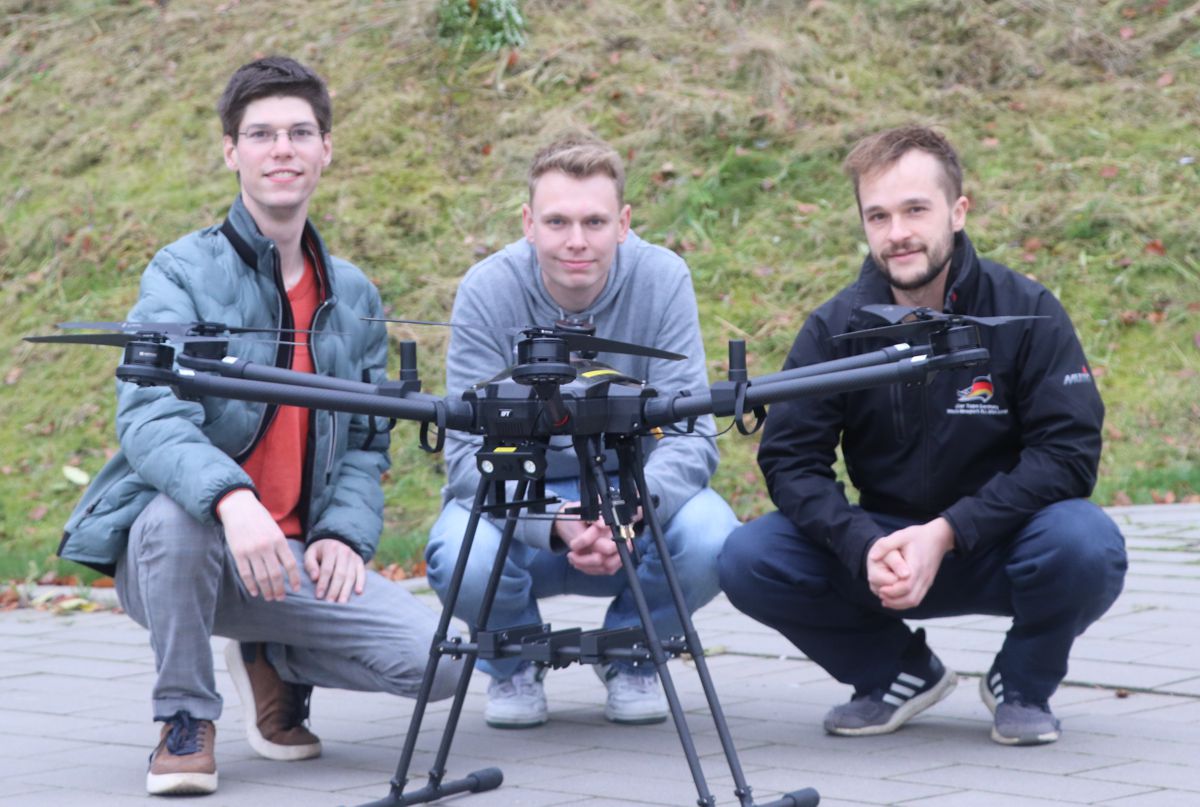 Since early summer, Julius Braun-Dullaeus, David Thesing and Martin Semmelrodt have joined the DSS team, bringing expertise in embedded systems, sensor hardware and physics. Julius has been connected to DSS throughout his studies, working on stochastic modeling and underwater signal processing. His current work focuses on a drone-based system for localizing and classifying magnetic objects. David continues his master’s research at DSS, combining thin-film sensor development with real-time signal processing for 3D SONAR beamforming. Martin joined in August after completing his master’s degree in theoretical physics. Having first encountered DSS through a collaboration at Müller-BBM, he now works on drone-based magnetic detection of underwater objects and will take over the project from Julius in January.