
Download of the MuMoSD Corpus
 |
||
| Contents: | ||
Please feel free to download the MUMOSD corpus.
The name of the folder and files on the corpus are explicit so anyone can understand what type of signal and task is being used.
The folders name are divided in three parts Number-of-task_Task-name_Sensors, for example: A folder named 004_Cough_MT means that the folder contains the fourth task which is coughing 10 times and the sensors used are both throat mic and magnetic sensor.
Inside each folder the names of the files depends on the type of sensor used, in the previous example we will probably find an audio file with the throat microphone signal, and 3 audios with the magnetic sensor signal (one for each dimension). This last three audios will have names showing which direction is being mesured in that file
In addition, it would be great if you let us know about your application or research and maybe you have some ideas for further extension of the corpus. In this case please contact Gerhard Schmidt.
Available Corpus Versions
| Date | MUMOSD release version | Size | Download |
|---|---|---|---|
| 06.11.2023 | 1.0 | 64 GByte |  |
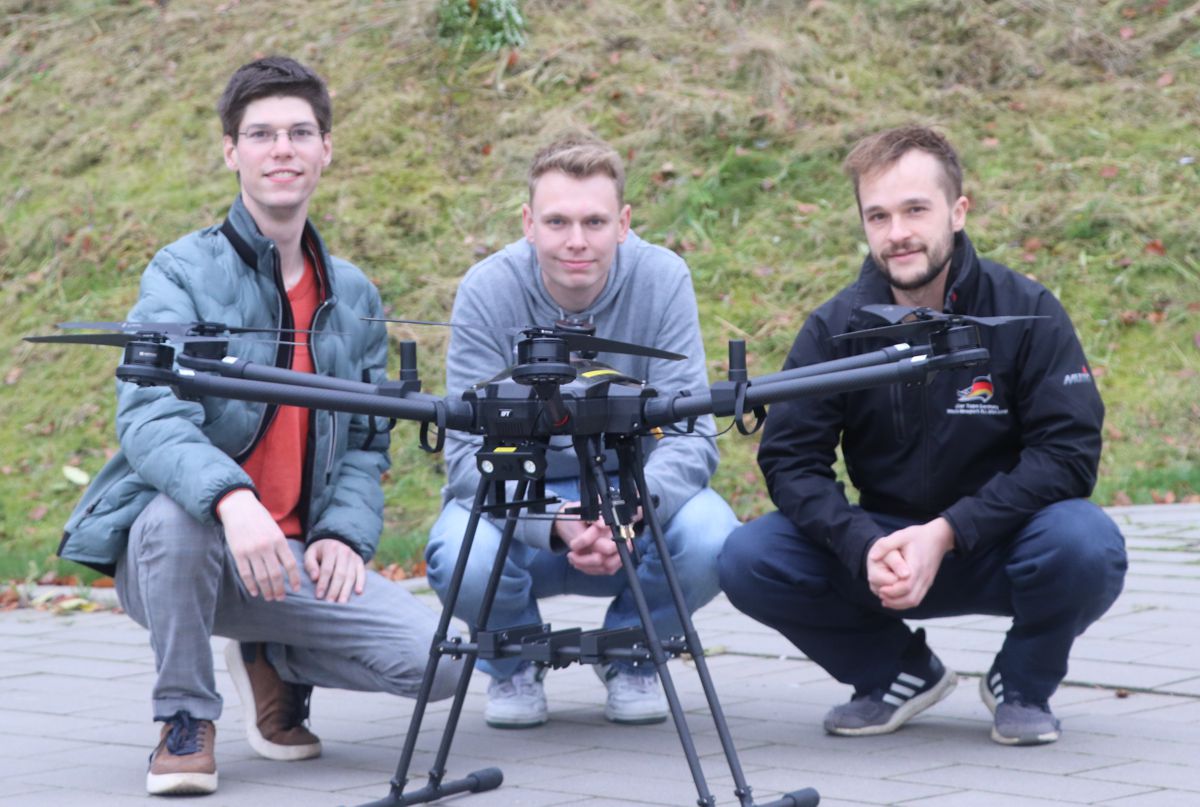 Since early summer, Julius Braun-Dullaeus, David Thesing and Martin Semmelrodt have joined the DSS team, bringing expertise in embedded systems, sensor hardware and physics. Julius has been connected to DSS throughout his studies, working on stochastic modeling and underwater signal processing. His current work focuses on a drone-based system for localizing and classifying magnetic objects. David continues his master’s research at DSS, combining thin-film sensor development with real-time signal processing for 3D SONAR beamforming. Martin joined in August after completing his master’s degree in theoretical physics. Having first encountered DSS through a collaboration at Müller-BBM, he now works on drone-based magnetic detection of underwater objects and will take over the project from Julius in January.