
Lecture "Medical Engineering: Simulations and AI in a Regulated Environment"
| Basic Information | |
|---|---|
| Lecturers: | Andreas Kater |
| Room: | Building xxx, room xxx |
| E-mail: | |
| Language: | English |
| Target group: | Students in electrical engineering |
| Prerequisites: | Basics in system theory |
| Contents: |
Topic overview:
|
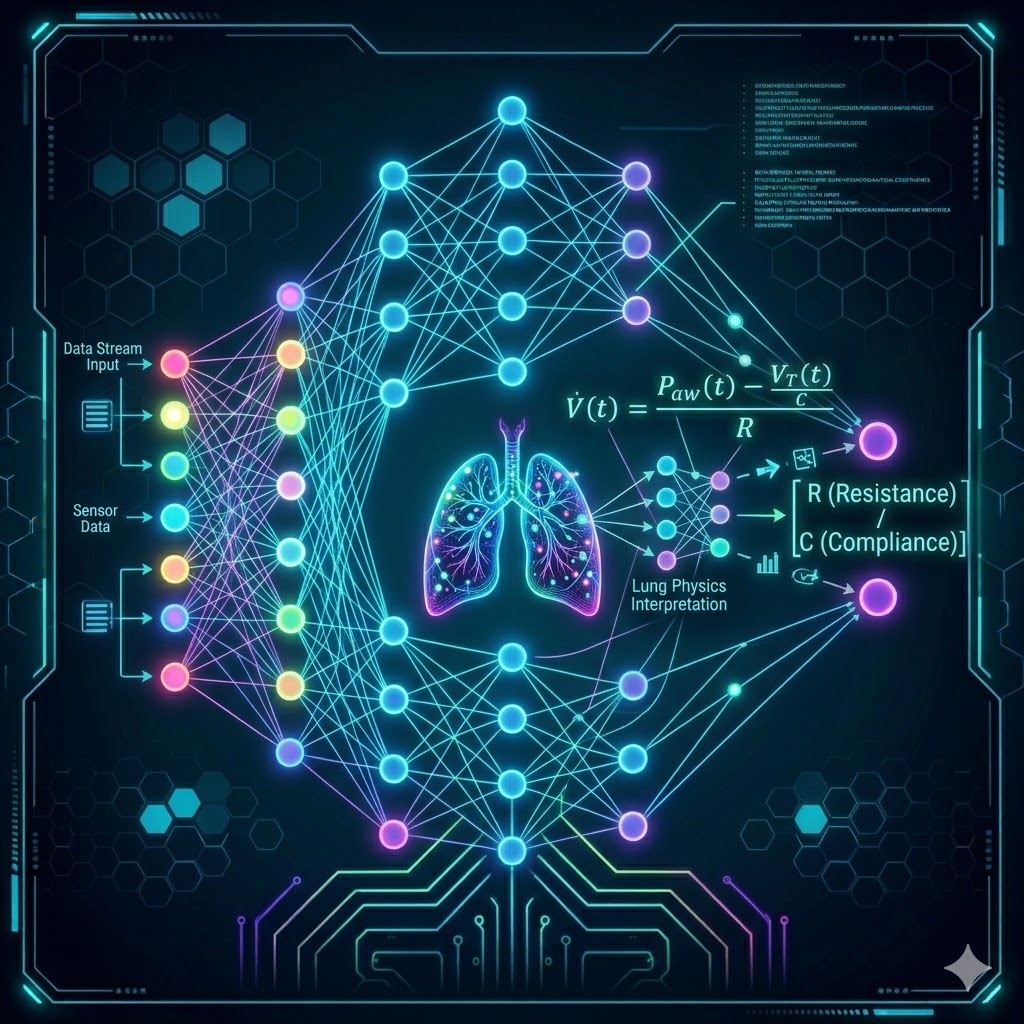 Students attending this lecture will gain a comprehensive understanding of simulation methods in medical engineering, with a focus on regulatory requirements and innovative approaches such as Physics-Informed Neural Networks (PINNs) and Digital Twins. The course covers theoretical foundations, practical implementation, and evaluation of simulations, particularly in the context of ventilation and anesthesia technology. By the end of the course, students will be able to develop, validate, and assess simulation models for medical devices, considering both technical and regulatory aspects.
News
The lecture will start in the summer term 2027.
Schedule
The following schedule regarding lectures and excercises is preliminary and may be adapted during the semester.
Each event starts at x:xx h and might use the whole slot (lecture and exercise) until xx:xx h.
| Date | Event |
|---|---|
| xx.xx.2027 | xxx |
| xx.xx.2027 | xxx |
| xx.xx.2027 | xxx |
| xx.xx.2027 | xxx |
Lecture Slides
| Link | Content |
|---|---|
 |
Slides of the lecture "xxx" (xxx, xxx, xxx) |
Extensions
Matlab Demos
Exams
If you do not have a date for the exam yet please register in the online booking system (once the exam dates have been set). You can find the booking system here.
Evaluations
The completed evaluations of the last years can be found here. Please note that this page contains the evaluations of all of our lectures. As a consequence, you must scroll down to get to the evaluations of this lecture.
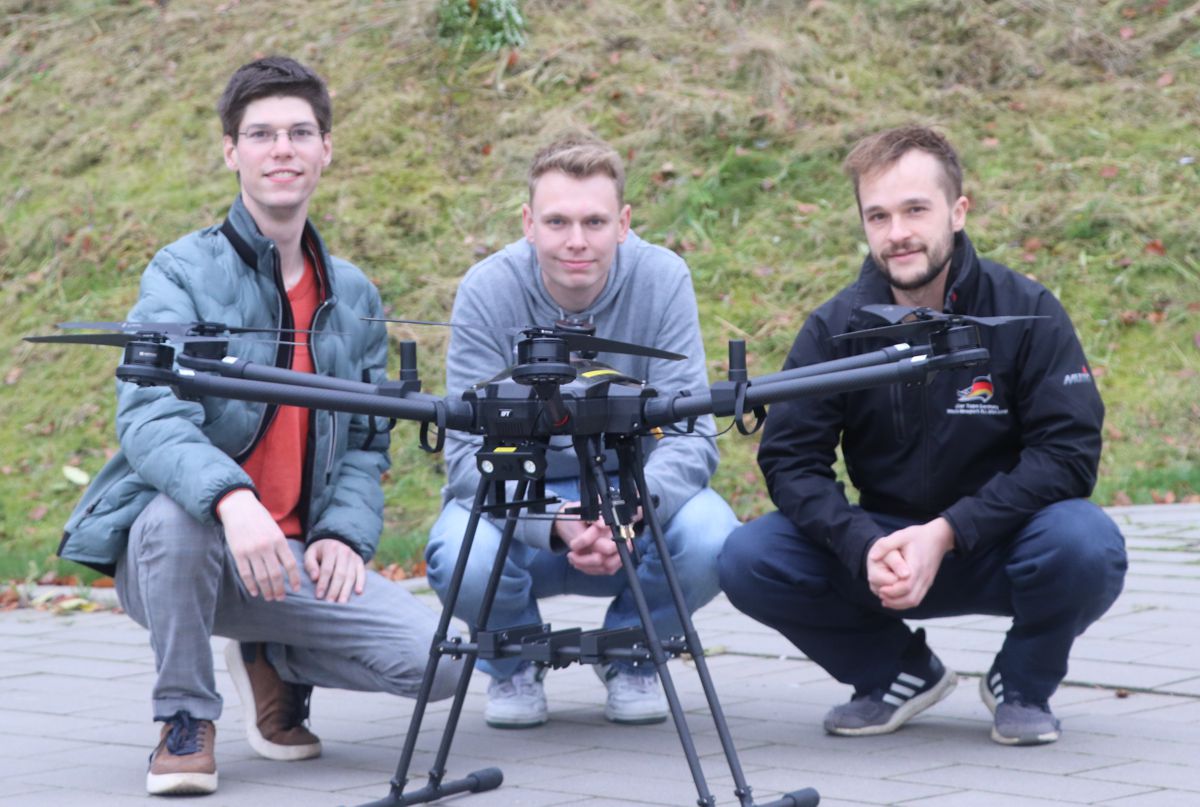 Since early summer, Julius Braun-Dullaeus, David Thesing and Martin Semmelrodt have joined the DSS team, bringing expertise in embedded systems, sensor hardware and physics. Julius has been connected to DSS throughout his studies, working on stochastic modeling and underwater signal processing. His current work focuses on a drone-based system for localizing and classifying magnetic objects. David continues his master’s research at DSS, combining thin-film sensor development with real-time signal processing for 3D SONAR beamforming. Martin joined in August after completing his master’s degree in theoretical physics. Having first encountered DSS through a collaboration at Müller-BBM, he now works on drone-based magnetic detection of underwater objects and will take over the project from Julius in January.