
Signal Enhancement for the SPID Corpus
 |
||
| Contents: | ||
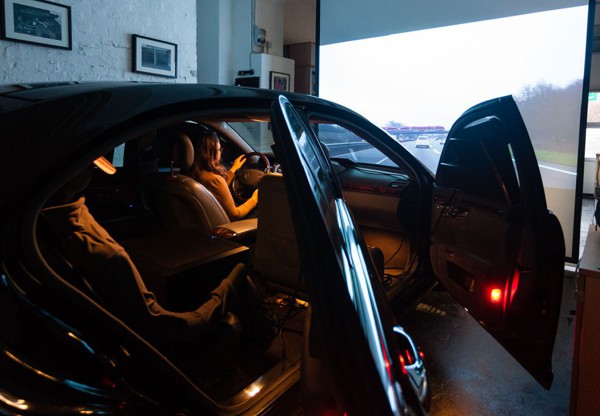
In order to cancel the noise introduced by the ambiance simulation, an adaptive filter based noise cancellation algorithm was applied to the recordings of the SPID corpus. Furthermore, a frequency-domain noise and cross-talk suppression was applied. The two time and time-frequency pots below show examples. The enhanced as well as the original signals are available for the entire corpus parts where the ambiance simualtion was used.
Original Recording

Enhanced Recording

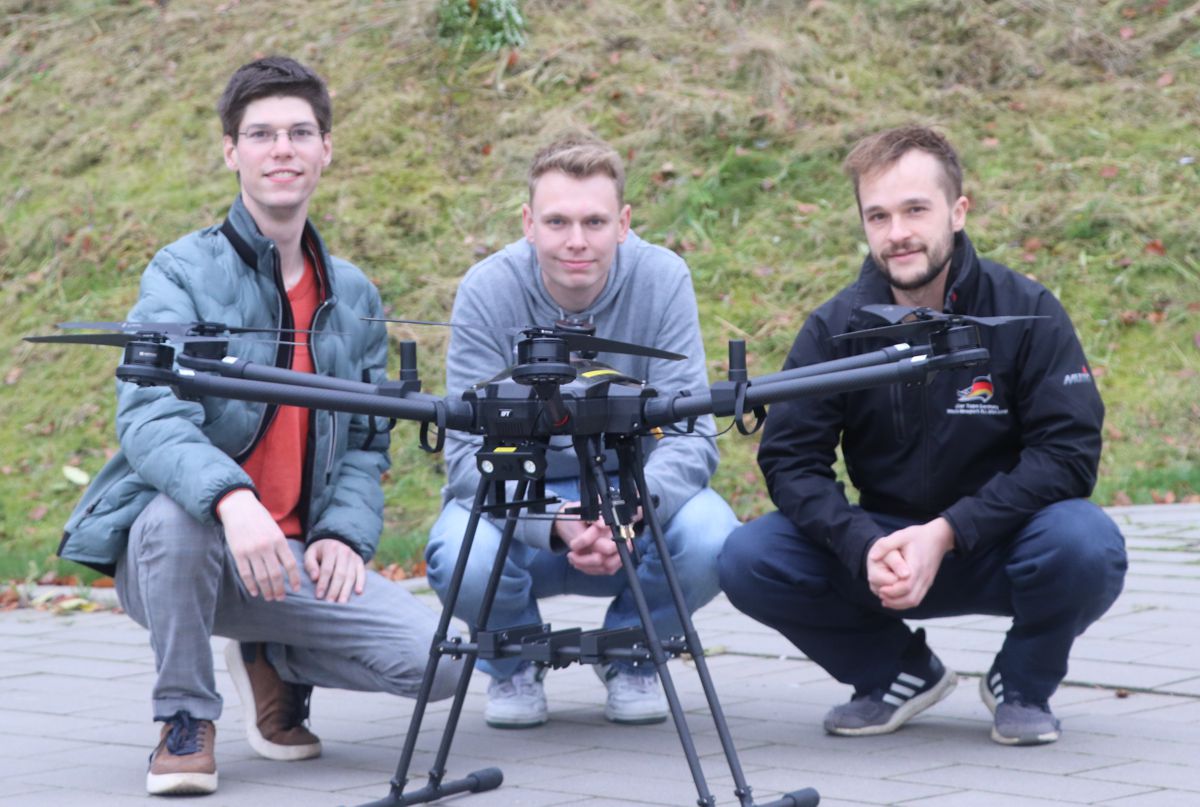 Since early summer, Julius Braun-Dullaeus, David Thesing and Martin Semmelrodt have joined the DSS team, bringing expertise in embedded systems, sensor hardware and physics. Julius has been connected to DSS throughout his studies, working on stochastic modeling and underwater signal processing. His current work focuses on a drone-based system for localizing and classifying magnetic objects. David continues his master’s research at DSS, combining thin-film sensor development with real-time signal processing for 3D SONAR beamforming. Martin joined in August after completing his master’s degree in theoretical physics. Having first encountered DSS through a collaboration at Müller-BBM, he now works on drone-based magnetic detection of underwater objects and will take over the project from Julius in January.