
Software Versioning
 |
||
| Contents: | ||
Our software versioning follows the major.minor.development scheme.
- A change in the major version number usually yields from fundamental changes in the KiRAT source code which rule out downward-compatibility with previous KiRAT versions.
- The addition of new features and capabilities to the framework is accounted for by incrementing the minor version number.
- A development version update is then caused by changes which are made in preparation for a minor version update or by changes which improve overall performance.
A more detailed list explaining our versioning scheme can be found in the table below:
| Type | Properties |
|---|---|
| Major |
|
| Minor |
|
| Development |
|
Version Overview
| Version number | Date | Description |
|---|---|---|
| 3.5.0 | 28.07.2020 | Updated to Qt version 5.15.X. |
| 3.4.1 | 11.07.2019 | Added underwater evaluation module to measure hydrophone and projector characteristics. |
| 3.4.0 | 02.07.2019 | Updated Intel IPP libraries, added Tensorflow support and revived KiRAT under Linux. |
| 3.3.0 | 04.06.2019 | Changed compiler to Visual Studio 19 (v142) and updated to Qt version 5.12.X. |
| 3.2.0 | 31.07.2018 | Abstract asynchronous IOs added. In addition, a specific application has been added (GPS input stream over TCP-IP). SONAR system location can be shown on a map including several additional information. SONAR PPI plot background can be set to a map. |
| 3.1.0 | 19.08.2017 | Appearance of the graphical overview was modified. Automatic scaling of fonds and widgets according to the screensize was implemented. For larger monitors a new display area that can be filled freely by the user was added. |
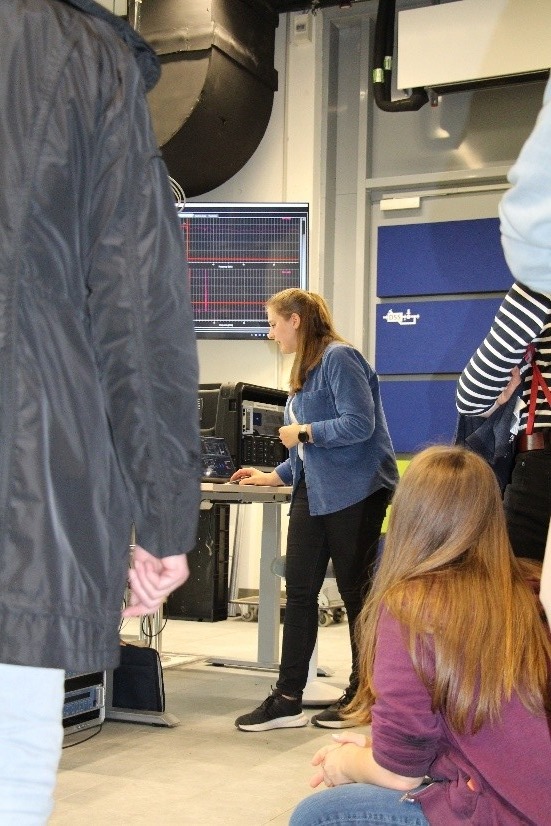 Science Day took place in Kiel and at the Faculty of Engineering on 25 September 2026. The DSS group contributed two demonstrations that gave visitors an insight into current research on signal processing, underwater acoustics and speech signals.